Generic selectors
Exact matches only
Search in title
Search in content
Post Type Selectors

    What do you need help with?

    Are you an existing customer?


    Help Request Sent!

    We have received your help request and will start processing it shortly. We aim to reply with a quote within 24 hours.

    If request is urgent please call 01233 740149

    DSEAR Risk Assessments

    Practical DSEAR risk assessments and hazardous area zoning for sites that store, transfer or dispense fuel and other flammable substances, carried out by engineers who design, install and maintain fuel systems every day.
    • Assessments to DSEAR 2002 and HSE guidance
    • Hazardous area zoning with marked-up site drawings
    • Clear, prioritised action report
    • CompEx-certified engineers, nationwide
    45+ Years Combined Experience
    Nationwide Coverage & Worldwide
    CompEx & OFTEC Engineers
    Trusted by Many Sectors

    DSEAR 2002 Compliance

    Every assessment is carried out against the Dangerous Substances and Explosive Atmospheres Regulations 2002 and supporting HSE guidance. You get a documented record of your significant findings, ready for insurers, auditors and enforcing authorities.

    Hazardous Area Zoning

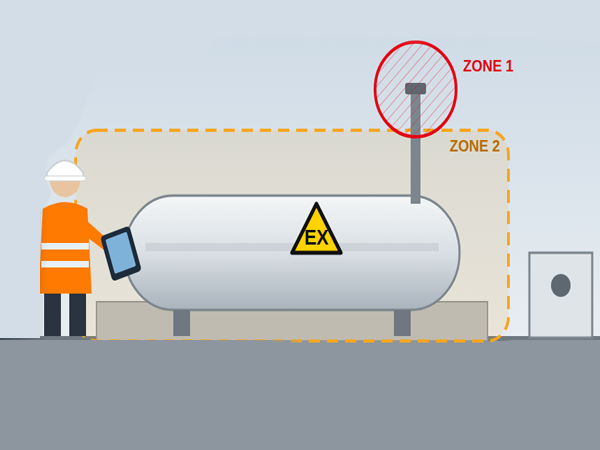
    Where an explosive atmosphere could form, we classify the area and mark the zones on your site drawings. You can see at a glance where only suitably certified ATEX/UKEX equipment should be used.

    CompEx-Certified Engineers

    Our assessors are CompEx-certified engineers who work on fuel tanks, pumps and dispensers every day. That hands-on knowledge means risks are spotted on site, not just on paper.

    Clear, Prioritised Actions

    Our report ranks every recommendation by urgency, from quick fixes like signage to equipment or ventilation changes. BMS can carry out the remedial work too, so one team takes you from findings to compliance.

    What Is a DSEAR Risk Assessment?

    DSEAR, the Dangerous Substances and Explosive Atmospheres Regulations 2002, requires employers to assess and control the fire and explosion risks created by dangerous substances at work. A DSEAR risk assessment identifies those substances, how they could be released and ignited, and the measures needed to eliminate or reduce the risk. Where five or more people are employed, the significant findings must be recorded.

    Who Needs a DSEAR Assessment?

    Any business that stores or handles flammable liquids, gases, vapours or combustible dusts needs one. For our customers, this typically includes bulk fuel storage tanks, fleet and transport depots, forecourts, farms, marinas, aviation fuel facilities, standby generator sites and industrial premises using solvents or other flammable chemicals.

    Our DSEAR Assessment Process

    We begin with a site visit to identify every dangerous substance and how it is stored, transferred and dispensed: tanks, fill points, vents, pipework, pumps and dispensers. We assess potential release and ignition sources, ventilation and existing controls, then judge how likely a flammable atmosphere is to form and how serious the consequences could be. Findings are written up into a clear report with recommendations ranked by priority.

    Hazardous Area Classification & ATEX Zoning

    Where an explosive atmosphere could occur, we classify the hazardous areas into zones: Zones 0, 1 and 2 for gases and vapours, and Zones 20, 21 and 22 for dusts, and mark them on site drawings. This shows where equipment must be suitably certified to ATEX/UKEX, where Ex warning signs are needed, and helps you check that installed electrical and mechanical equipment is fit for its zone.

    Keeping Your Assessment Up to Date

    Keep a DSEAR assessment under regular review and update it whenever something significant changes, such as a new tank, modified pipework, a different fuel, or a change in how the site operates. BMS can schedule periodic reviews and, because we also install and maintain fuel systems, reassess your site as part of any upgrade we carry out.

    Book Your DSEAR Risk Assessment

    Talk to our team about a DSEAR assessment for your site, whether it's a single fuel tank or a multi-site estate, we'll give you a clear quote and a practical report you can act on.

    • Assessed to DSEAR 2002
    • Hazardous area zoning drawings included
    • CompEx-certified experts
    • Nationwide coverage

    Powered by Industry-Leading Technology

    Why Choose BMS

    • CompEx & OFTEC expertise
    • 45+ years' combined experience
    • Nationwide coverage

    DSEAR 2002 Compliance

    Every assessment is carried out against the Dangerous Substances and Explosive Atmospheres Regulations 2002 and supporting HSE guidance. You get a documented record of your significant findings, ready for insurers, auditors and enforcing authorities.

    Hazardous Area Zoning

    Where an explosive atmosphere could form, we classify the area and mark the zones on your site drawings. You can see at a glance where only suitably certified ATEX/UKEX equipment should be used.

    CompEx-Certified Engineers

    Our assessors are CompEx-certified engineers who work on fuel tanks, pumps and dispensers every day. That hands-on knowledge means risks are spotted on site, not just on paper.

    What Our Clients Say About Us

    “
    "Firstly, I just wanted to thank you all for your help and can-do attitude at Bulk Meter Services that you have provided during my time with Aspire. Today I am retiring (9th October) and wanted to convey my appreciation to a very professional and personable organisation. Your help and expertise are greatly appreciated by my colleagues and me. Can you convey my thanks to your back-office and technicians, as they have always been a pleasure to work with. Again, a big thank you and take care, everybody."
    Jim, PPM Administrator, Aspire

    Frequently Asked Questions

    Is a DSEAR risk assessment a legal requirement?

    Yes. If dangerous substances such as fuels, solvents or flammable gases are present at your workplace, DSEAR requires you to assess the fire and explosion risks. Where you employ five or more people, the significant findings must be recorded in writing.

    Does diesel storage need a DSEAR assessment?

    Diesel has a high flash point, so it is less likely than petrol to create an explosive atmosphere at normal temperatures, but it is still classed as a dangerous substance under DSEAR. A risk assessment is still needed; it may conclude that little or no hazardous area zoning is required, but that judgement should be made and recorded.

    What's the difference between DSEAR and ATEX?

    DSEAR is the UK regulation that requires you to assess and control risks from dangerous substances. ATEX (and its UK equivalent, UKEX) sets the standards for equipment used in hazardous areas. Your DSEAR assessment defines the zones; ATEX/UKEX certification shows which equipment is safe to use in each one.

    How long does a DSEAR assessment take?

    Most single-site fuel installations can be surveyed in a day or less, with the written report and zoning drawings following afterwards. Larger or more complex sites take longer, we’ll confirm timescales when we quote.

    How often should a DSEAR assessment be reviewed?

    DSEAR requires the assessment to be kept up to date. Review it regularly and whenever there is a significant change, such as new tanks, modified pipework, a change of fuel or an incident. Many sites choose a periodic review alongside their routine maintenance.